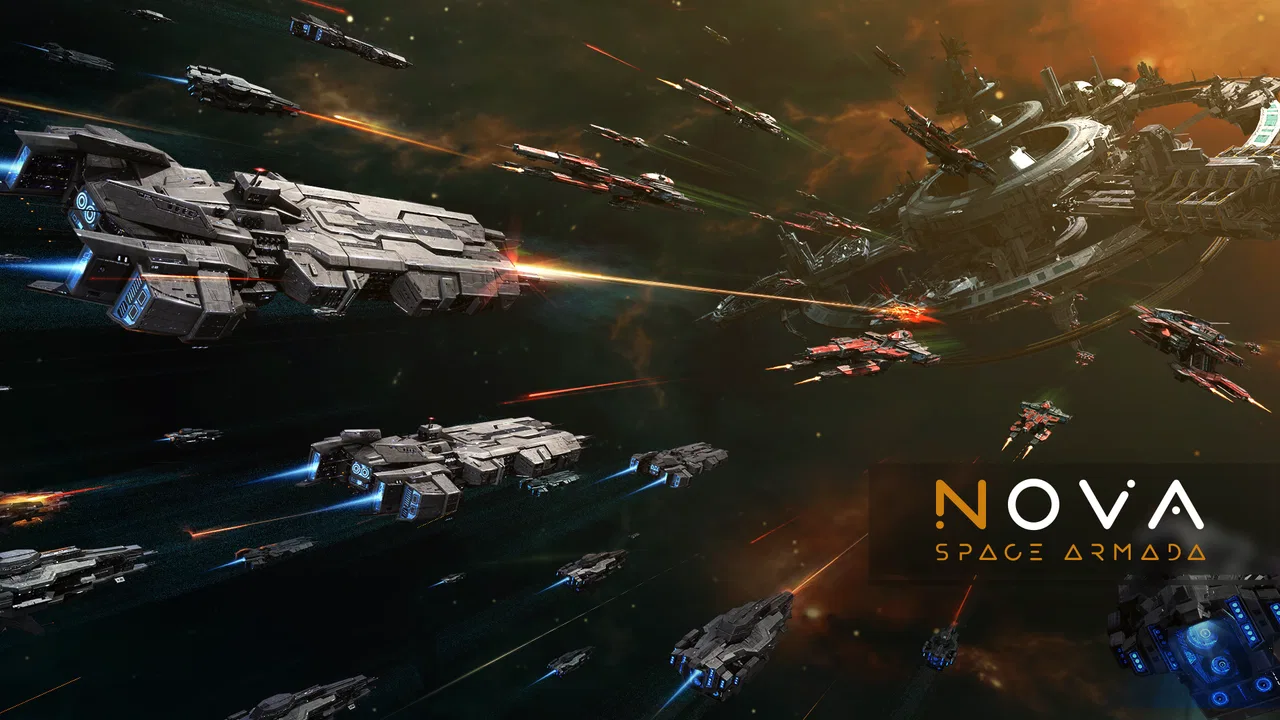
Nova: Space Armada
- 4.4
- Rating
- 1.00M
- Installs
- Free
- Price

 Analysis by App-foxy
I went into Nova: Space Armada expecting a familiar mobile strategy game with a science-fiction skin, but its appeal became clearer once I paid attention to the rhythm of each session. You make a decision, watch the result unfold, collect the benefit, adjust your approach, and then start again with a slightly different objective in mind. That cycle is the real reason to return. It is not simply about looking at spaceships; it is about turning short bursts of planning into visible progress.
Developed by STONE3 PTE. LTD., this free strategy game is built around space adventure and is aimed at players who enjoy making choices rather than only reacting quickly. It has reached over a million installs and holds a 4.4 average from roughly fifty-five thousand ratings, which gives it a sizeable audience without making popularity the only reason to try it. My own recommendation depends more on your patience: if you like gradually improving a space-focused setup, there is something satisfying here. If you want a completely hands-off experience or a fast arcade battle, this is probably not the right fit.
How the session loop feels in practice
I use the session loop to judge whether a strategy game fits real pockets of free time, not just whether its theme catches my eye. Here, the useful question is whether each visit leaves me with a clear next move or merely another task to clear. I’d pay attention to that distinction when deciding how to approach the opening stretch, because it leads naturally to the small setup checks that can prevent avoidable frustration.
You May Also Like

 Blood Strike: 2.5 Anniversary
Blood Strike’s Loadouts Turn Every Drop Into a Tactical Gamble
A close look at Blood Strike’s custom loadouts: how fast access to signature weapons reshapes its battle royale rhythm, rewards preparation, and narrows the gap between fights.

 Pandora - Music & Podcasts
Pandora’s Music Is Easy to Start, but Harder to Recover
Pandora’s strength is its low-effort path from a seed to a station. Its weak spot is how much confidence it asks you to place in connection, setup, and quiet recovery.

 8 Ball Pool
 Is Built on Rivalries, Rematches, and Routine
A close look at the rivalries, rematches, shared routines, and unanswered safety questions that turn a quick pool match into a persistent mobile community.

 Samsung Music
’s Quiet Strength Is Playing What You Already Own
Its reach comes less from spectacle than from dependable access to a personal library. That simplicity is both the app’s strongest retention engine and its ceiling.

 AccuWeather: Weather Radar
AccuWeather Review: A Quick, Clear Forecast for Everyday Decisions
For everyday plans, the best forecast is the one you can understand quickly. AccuWeather makes rain timing, radar, and local conditions easy to act on, with a few trade-offs.

 Hill Climb Racing
Why Hill Climb Racing Still Turns Crashes Into One More Run
A tiny car, a bumpy hill and one more upgrade: Hill Climb Racing keeps resurfacing because its simple chaos makes every near-miss feel personal.
More From Our News Desk



The first action is choosing what deserves attention
The opening decision in a session is rarely dramatic, and that is part of the design. Instead of treating every moment as an emergency, I found myself deciding which objective, upgrade, or tactical concern should receive priority. That small act of selection gives the game its strategic character. The space setting provides the motivation, but the actual enjoyment comes from weighing an immediate improvement against a longer-term advantage.
This makes the game easier to approach than strategy titles that throw a large map, several menus, and a long list of systems at you all at once. I could begin with one clear intention, see how the game responded, and then refine the next decision. That is useful on a phone because I do not need to reserve an entire evening before I can understand whether a choice was worthwhile.
At the same time, the sci-fi presentation does not remove the need to think ahead. A decision that looks attractive because it produces a quick result may not be the best use of the next part of a session. I learned to pause before spending a reward and ask what problem I was actually solving. Was I trying to become stronger immediately, prepare for a more demanding encounter, or simply keep the current run moving? That question prevents the loop from becoming empty tapping.
My most useful early habit was to define one purpose for each session. I might play to improve a weak area, test a different approach, or finish a particular objective. Without that small rule, it is easy to move between activities without noticing what has changed. With it, even a short visit feels like a deliberate experiment.
Feedback arrives through progress rather than spectacle
The feedback rhythm is what keeps the first decision meaningful. After I act, the game gives me a result that helps explain whether the choice worked. The reward may encourage me to continue, while an inefficient outcome points toward a different approach. This is a better structure than a game that simply hands out constant bonuses, because the player can connect the result with the decision that produced it.
I especially liked the moments when a modest improvement changed how I approached the next challenge. A stronger position is not valuable only because a number rises; it matters because it can alter the order in which I handle tasks or the amount of risk I am willing to accept. That creates a useful feedback loop: action creates a result, the result changes my options, and those options shape the next action.
The rhythm is not always equally exciting. Some stretches feel more like maintenance than discovery, particularly when I am repeating a familiar activity to build toward a later improvement. Players who need every minute to introduce a new mechanic may find that slow. I did not see that repetition as a deal-breaker, but I did need to set a stopping point. Continuing after I had already achieved my session goal made the game feel more routine than strategic.
That is also where the mobile format helps. I can make progress without committing to a long uninterrupted campaign. A short session can still have a beginning, a decision, and a result. The trade-off is that the deeper value appears over several visits, so someone judging it after only a few minutes may miss the way its choices accumulate.
Rewards work best when they answer a question
The reward stage is more satisfying when I already know what I want the reward to do. A new resource or improvement feels useful when it addresses a weakness I noticed during the previous action. If I collect everything without a plan, the reward becomes visual noise. That is why I recommend looking at the next likely obstacle before immediately claiming every possible benefit.
One practical workflow helped me avoid waste: I would finish an activity, review what had slowed me down, and only then decide where the resulting benefit should go. This is more effective than upgrading automatically. It also makes the game feel personal, because the same reward can have a different value depending on whether I am preparing for pressure, recovering from a poor run, or trying to make future sessions smoother.
The free entry point makes experimenting comfortable, but the presence of in-app purchases changes how carefully I approach the reward loop. Individual purchases range from $0.99 to $99.99, so I would not recommend treating spending as a casual shortcut. The game is more enjoyable when I first understand which improvement actually matters to my play style. Buying before learning that can turn a strategic decision into an expensive guess.
For younger players, the Everyone 10+ rating is worth keeping in mind, especially because the purchase range can be significant at the upper end. I would use device purchase controls if a child is playing. That is not a criticism of the space theme itself; it is simply sensible whenever a free game includes optional spending.
The reset gives the next session a reason to exist
A good session needs an ending that does not feel like failure. In this game, the reset is less about erasing everything and more about returning with new information. I finish knowing which choice helped, where I lost momentum, and what I want to try next time. That makes the next session feel connected to the previous one without requiring me to repeat it in exactly the same way.
This reset is particularly useful for everyday play. Imagine having ten minutes during a commute or while waiting for an appointment. I can enter with a narrow goal, make a few meaningful decisions, collect the result, and stop at a natural point. Later, I remember the unfinished question rather than merely remembering that I opened an app. That is a stronger reason to return than a notification or an arbitrary daily obligation.
There is a limit, however. If you dislike repeating activities to build toward a stronger position, the reset may feel like a loop rather than progress. The game asks you to accept that improvement can be gradual. It rewards players who enjoy testing small changes and observing their effects. It is less suitable for someone who wants a single, tightly authored story with a clear final conclusion.
I also found that stopping after a useful result is important. The temptation is to continue because the next reward appears close, but that can lead to rushed choices. My better sessions ended after I had answered one question, such as whether a particular approach solved a recurring weakness. The pause then became part of the strategy rather than an interruption.
What makes the space setting matter
The space adventure theme gives the decisions a sense of direction. I am not merely arranging abstract pieces; I am thinking in terms of an armada, future encounters, and the broader idea of building strength among the stars. That framing helps the progression feel more memorable than a completely neutral strategy interface.
Still, I would not choose this game solely for the science-fiction label. Its strongest quality is the interaction between planning and progression, not the promise of a cinematic space opera. Players looking for deep narrative role-playing or a highly technical simulation may want something more specialized. Nova: Space Armada works better as a strategy companion for repeated short sessions, where the setting adds flavor to decisions that remain easy to understand.
The game also benefits from being approachable on older supported devices. Its minimum requirement is Android 7.0, which makes it accessible to people who are not using the newest phone. That matters for a strategy title intended to be revisited often: a game that fits an existing device is more likely to become part of a routine than one that demands an upgrade before it can be tested.
Where it fits beside other strategy choices
Compared with a traditional real-time strategy game, this is a calmer proposition. You are not required to manage every second with the intensity of a desktop battlefield. That makes it better for touch-screen play and fragmented free time, but it also means the tension may feel lighter for players who want constant pressure and rapid commands.
Compared with a purely idle space game, it asks more from me. I cannot simply wait for progress and assume that the outcome will always be useful. The value comes from choosing priorities and interpreting feedback. The trade-off is that it may feel slower than an idle alternative when I only want to collect rewards with minimal involvement.
Compared with a large empire-building game, the experience is easier to fit into a routine. I do not need to treat every login as a major administrative session. That accessibility is a strength for newcomers, although experienced strategy players may eventually want more complexity than the compact loop provides. I would describe it as a middle ground: more thoughtful than passive progression, less demanding than a full-scale management simulation.
That middle position is why I would recommend trying it before deciding whether to spend money. The free download removes the initial barrier, while the purchase range means that commitment should come only after the basic loop has earned your time. If you enjoy the first-action-to-reset rhythm, optional spending can remain a personal choice. If the rhythm already feels repetitive, paying will not solve the underlying mismatch.
Small habits that improve the experience
First, I suggest keeping a simple mental note of the last obstacle rather than chasing the most visible reward. The next action becomes clearer when it responds to a real problem. This also reduces the chance of upgrading something merely because the game places it in front of you.
Second, separate testing from farming. When I am experimenting with a new approach, I accept that the immediate reward may be smaller because the purpose is to learn. When I am farming progress, I use the approach I already trust. Mixing those goals can make a failed experiment feel worse than it should and can make routine play feel aimless.
Third, stop when the feedback becomes unclear. If I am tapping through activities without knowing why I am doing them, that is usually a sign to reset my attention rather than continue. A short break protects the strategic part of the game. This is an especially useful habit for players who tend to keep playing simply because another reward is nearly available.
Finally, review purchases as tools, not as proof of progress. Since the available items can cost anywhere from $0.99 to $99.99, I would never buy at the moment of frustration. I would first identify whether the purchase changes a decision I enjoy making or merely removes a delay. The former may support the experience; the latter can weaken the very loop that makes the game interesting.
Who should play and who should skip it
I think this game is a good match for someone who likes science-fiction settings, gradual improvement, and strategy that can be divided into manageable visits. It suits players who enjoy asking, “What should I improve next?” and then checking whether the answer worked. It is also a reasonable first step for someone curious about mobile strategy but not ready for a huge, intimidating management game.
I would be more cautious recommending it to players who want a competitive action experience, a deep narrative campaign, or instant variety in every session. It can also disappoint people who dislike optional purchases on free games, even if they never buy anything. The purchase range is broad enough that families should pay attention to account controls, and players who prefer a completely fixed-price experience may feel more comfortable elsewhere.
The current version is 1.4.30, and the game supports Android from version 7.0 onward. Those details make it worth checking compatibility before installing, particularly if your phone is older. On a supported device, the main question is not whether the game can be opened, but whether its measured pace fits the way you like to play.
My final verdict on the loop
Nova: Space Armada succeeds when I treat it as a sequence of small strategic questions. The first action gives me a direction, the feedback explains the consequence, the reward opens a useful possibility, and the reset turns what I learned into a reason to return. That is a clean structure, and the space setting gives it enough identity to avoid feeling like a completely interchangeable strategy title.
Its weaknesses come from the same design. Repetition can become noticeable, the pace may be too gentle for action-focused players, and optional purchases require restraint. Yet those limitations do not cancel the central appeal. They simply define the audience more clearly. I would install it for thoughtful short sessions, keep my goals narrow, and judge each reward by whether it improves my next decision.
For a free strategy game from STONE3 PTE. LTD. with an Everyone 10+ rating, a 4.4 average, and a growing player base, it offers a credible way to explore space-themed planning without immediately committing to a demanding empire simulator. If you enjoy progress that comes from adjusting your choices rather than merely waiting, this is worth trying. I would skip it only if the loop itself sounds like work, because no amount of space atmosphere can replace the satisfaction of wanting to begin one more session.
FAQs for Nova: Space Armada
01What is Nova: Space Armada about?
Nova: Space Armada is a strategy game set in a vast interstellar universe. Players build and manage fleets, engage in epic space battles, and explore uncharted galaxies. The game emphasizes strategic planning, resource management, and tactical combat, offering a rich and immersive experience for fans of space-themed strategy games.
02Is Nova: Space Armada free to play?
Yes, Nova: Space Armada is free to download and play on both Android and iOS platforms. However, it offers in-app purchases that can enhance gameplay. These purchases are optional but can provide advantages such as faster progression, exclusive items, and additional resources for those who choose to invest.
03What devices are compatible with Nova: Space Armada?
Nova: Space Armada is available on both Android and iOS devices. For Android, the game requires version 4.4 and up, while iOS devices need to be running iOS 9.0 or later. It's recommended to have a device with decent processing power to ensure smooth gameplay and optimal performance.
04Can I play Nova: Space Armada offline?
No, Nova: Space Armada requires an internet connection to play. The game includes real-time multiplayer features, which necessitate a stable online connection. Players interact with others in a shared universe, making online connectivity essential for accessing all game features and participating in events.
05How does multiplayer work in Nova: Space Armada?
In Nova: Space Armada, multiplayer interaction is a core element. Players can form alliances, compete in PvP battles, and collaborate on missions. The game encourages strategic alliances and provides various modes for competitive play, allowing players to test their skills against others in the expansive galaxy.
Pros
- Stunning graphics with vibrant space landscapes.
- Smooth gameplay with intuitive controls.
- Diverse fleet of customizable spacecraft.
- Engaging storyline with strategic missions.
- Regular updates with new content and features.
Cons
- Occasional in-app purchase prompts.
- Requires constant internet connection.
- High battery consumption during gameplay.
- Some missions can feel repetitive over time.
- Initial loading times can be lengthy.

Nova: Space Armada
Gallery